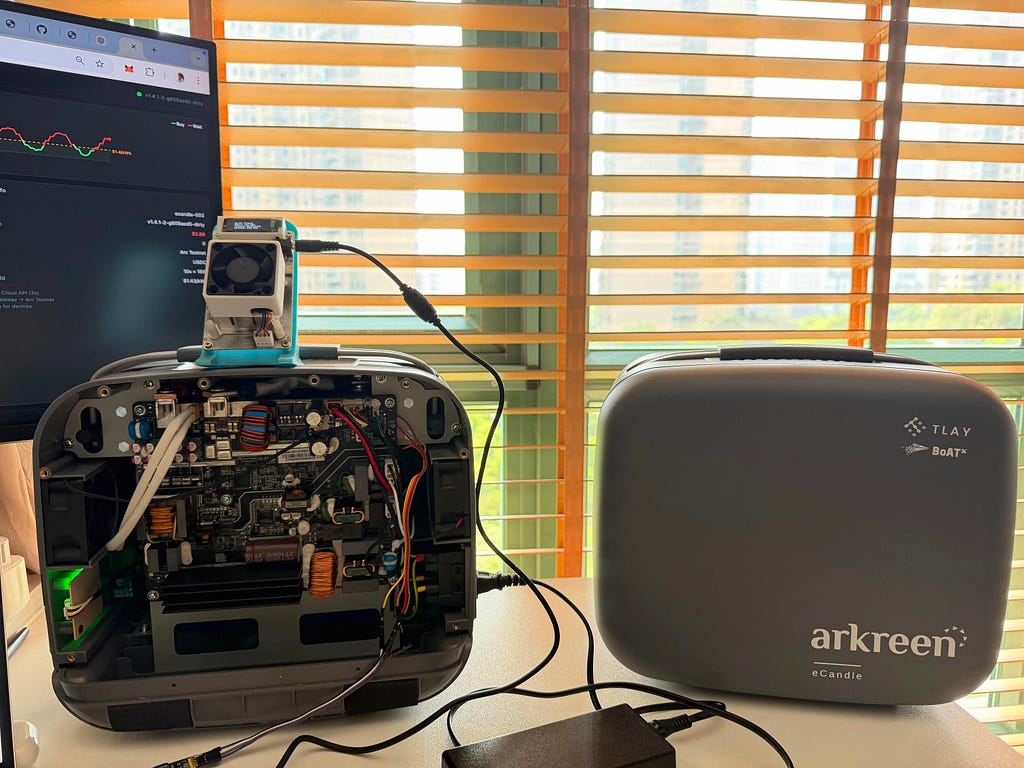
Two devices sit on a desk. On the left, an eCandle — a solar energy module built by Arkreen Network, powered by an ESP32-C3 microcontroller. On the right, a Bitaxe 601 — an open-source Bitcoin miner with a BM1370 ASIC and a small fan.
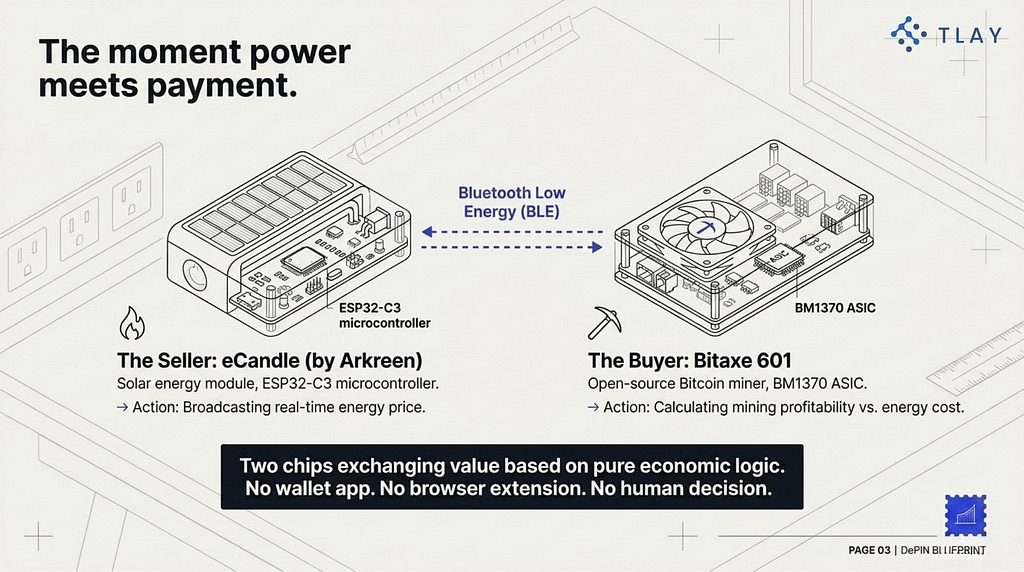
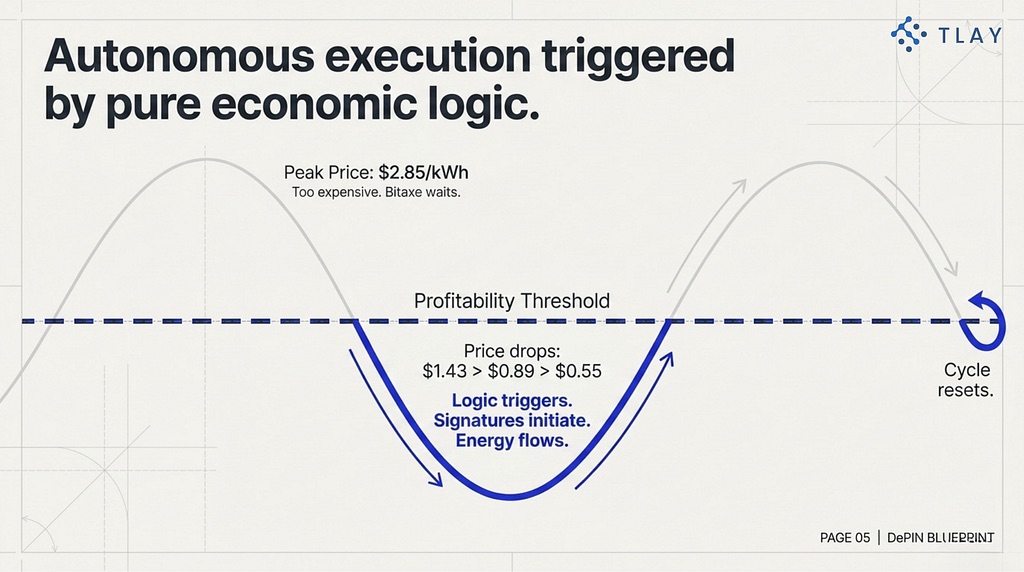
The fan is still. The eCandle is broadcasting its electricity price over Bluetooth: $2.85 per kilowatt-hour. Too expensive. The Bitaxe waits.
Then the price drops. $1.43… $0.89… $0.55. The Bitaxe’s logic kicks in: at this price, mining is profitable. It signs a cryptographic payment authorization, sends it over BLE, and starts drawing power. The fan spins up. Payment equals power.
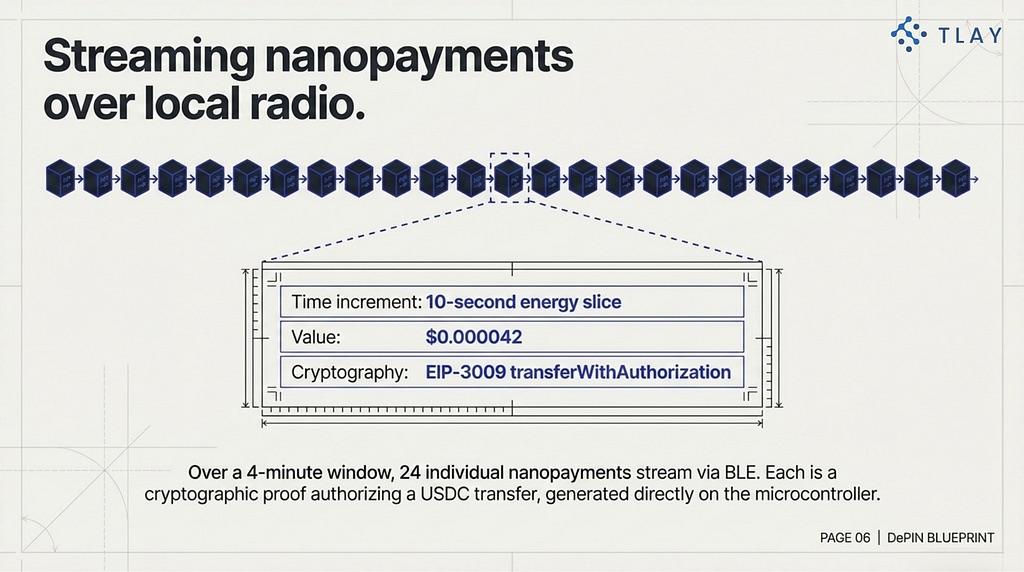
Over the next four minutes, 24 nanopayments stream between the two devices. Each payment covers a 10-second “slice” of energy — roughly $0.000042. No wallet app. No browser extension. No human decision. Just two chips exchanging value based on pure economic logic.
When the price spikes back above the threshold, the Bitaxe stops buying. The fan goes silent. When it drops again, the cycle resumes. Fully autonomous.
This is not a concept video. This is working hardware running production firmware.
The Problem: A Billion Devices That Can’t Pay
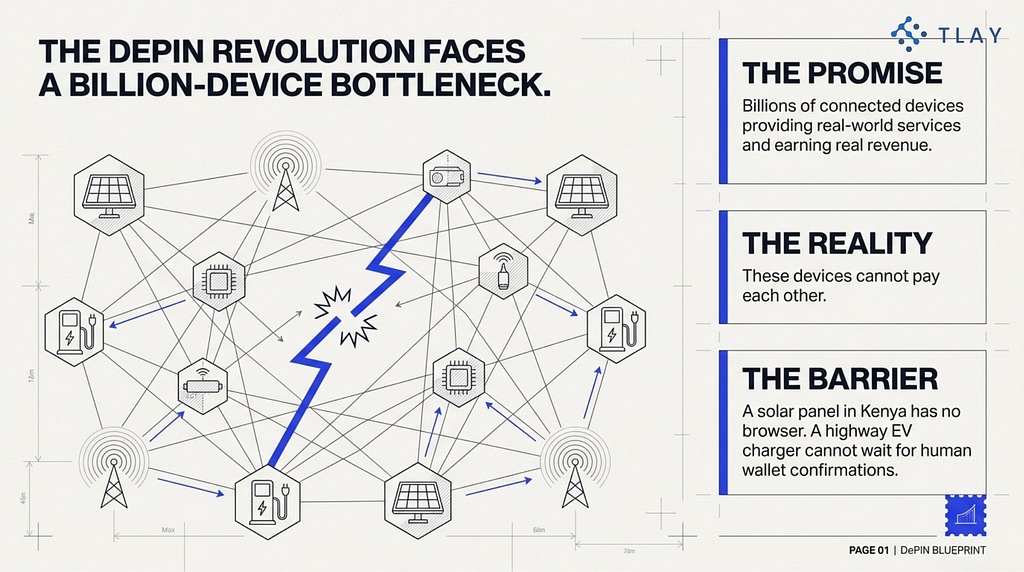
The DePIN (Decentralized Physical Infrastructure Network) revolution promises to connect billions of physical devices — solar panels, EV chargers, weather stations, connectivity hotspots — into decentralized networks where they provide real-world services and earn real revenue.
But there is a fundamental gap: these devices cannot pay each other.
Today’s payment infrastructure was designed for humans. It assumes someone is there to tap a card, confirm a transaction, or sign with a wallet app. A solar panel in rural Kenya doesn’t have a browser. An EV charger on a highway doesn’t wait for MetaMask confirmations. A sensor node selling environmental data can’t afford $0.50 in gas fees for a $0.004 data packet.
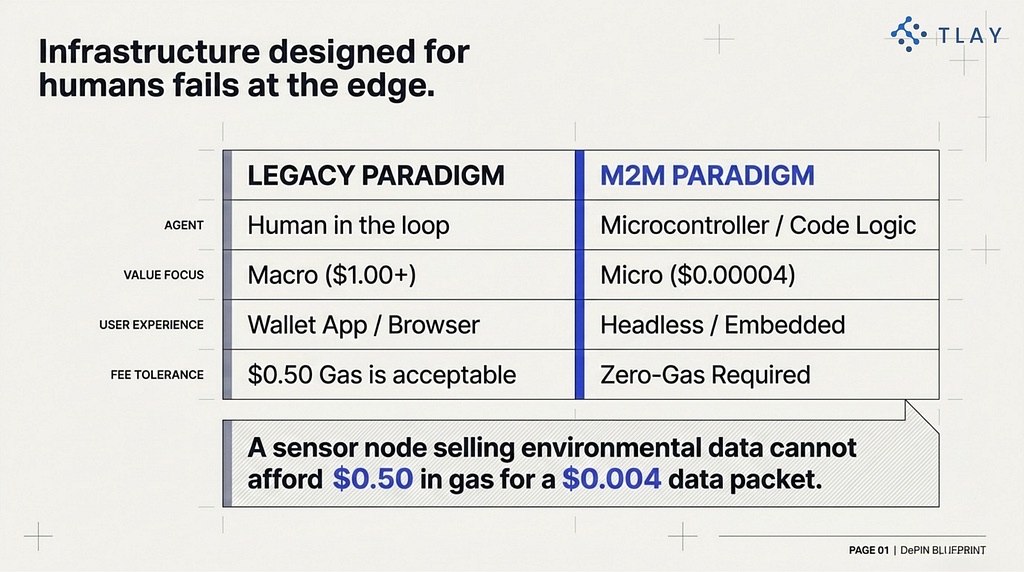
DePIN devices need a payment layer that is:
- Autonomous — no human in the loop - Sub-cent capable — transactions measured in fractions of a penny - Zero gas — the fee cannot exceed the payment - Real-time — settling in seconds, not blocks - Embeddable — running on a $2 chip with 400KB of RAM
No such layer existed. Until now.
What the Demo Shows
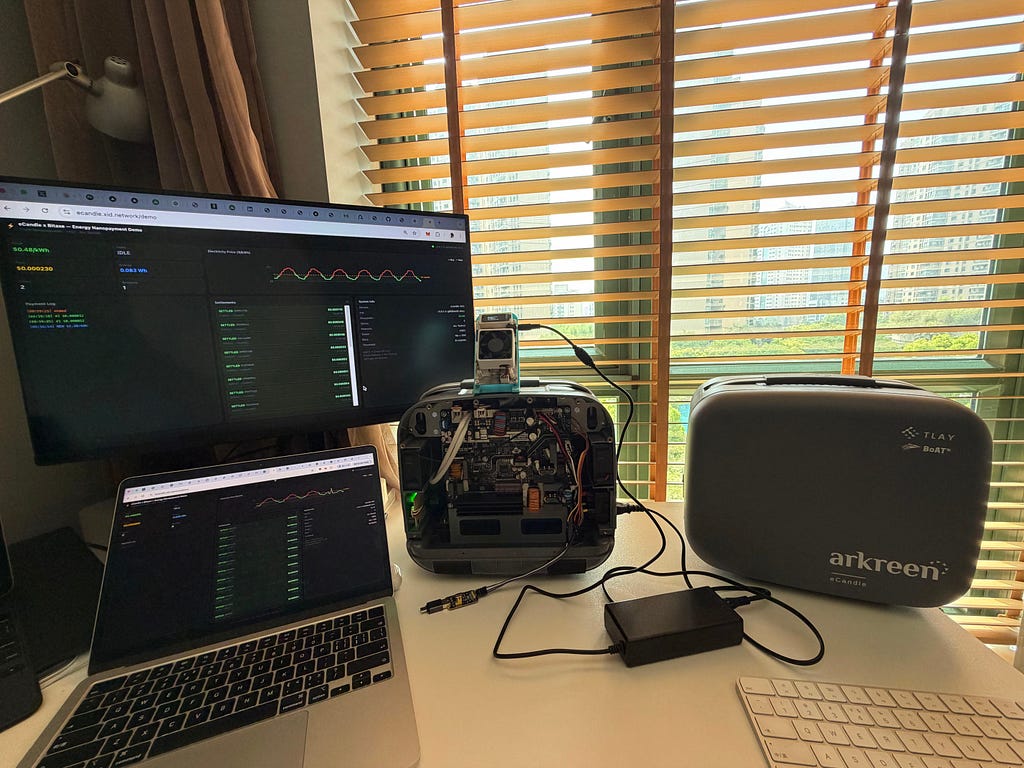
The eCandle x Bitaxe demo is a complete, end-to-end demonstration of machine-to-machine energy commerce:
1. Dynamic Pricing
The eCandle broadcasts a real-time electricity price that follows a sinusoidal curve, simulating the natural fluctuation of solar energy availability throughout the day. When the sun is strong, energy is cheap. When it’s scarce, the price rises.
2. Autonomous Purchase Decisions
The Bitaxe continuously monitors the price. It knows its own mining economics — hashrate, expected Bitcoin revenue, power consumption. When the energy price makes mining profitable, it buys. When it doesn’t, it waits. No human sets a threshold; the device calculates it.
3. Streaming Nanopayments
Each 10-second energy slice is paid for individually. The Bitaxe signs an EIP-3009 transferWithAuthorization directly on its microcontroller — a cryptographic proof that authorizes a USDC transfer. These signatures stream over Bluetooth Low Energy, one per slice.
4. On-Chain Settlement
The signed payment proofs accumulate and settle in batches via Circle’s payment infrastructure on Arc Testnet. Zero gas fees for the devices. Every payment is verifiable on-chain.
5. Automatic Cycle
Price rises → fan stops → price drops → fan starts. The cycle repeats indefinitely. No operator needed. No server polling for commands. Two devices, negotiating in real-time.
Why This Requires Three Players
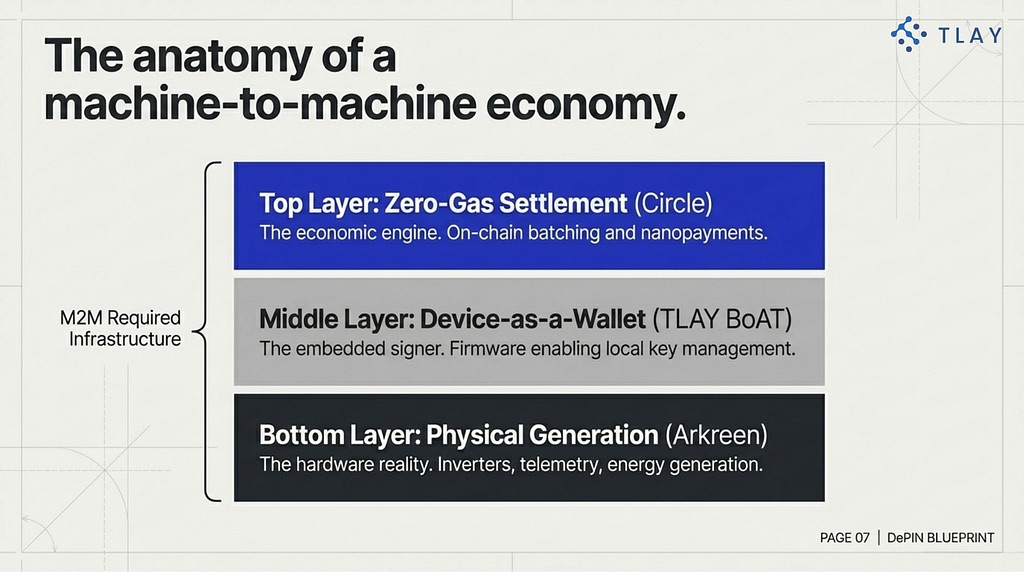
This demo is not the work of one team. It sits at the intersection of three capabilities that, together, unlock a new category of commerce.
Arkreen Network — The Hardware
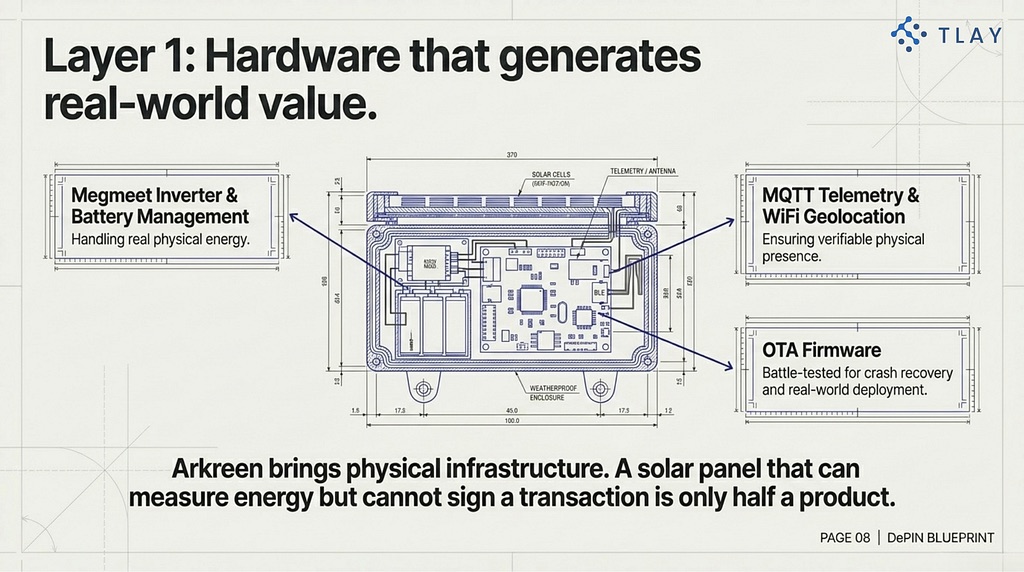
eCandle is not a simulation. It is a real, deployable solar energy device designed for off-grid communities in emerging markets. It has a Megmeet inverter, a battery management system, MQTT telemetry, WiFi geolocation, and over-the-air firmware updates. It is already deployed across multiple countries.
Arkreen brings the physical infrastructure — the “P” in DePIN. Without real hardware generating real energy, machine-to-machine payments are an academic exercise. eCandle makes them tangible.
But a solar panel that can measure energy and connect to WiFi is not enough. It also needs to sign transactions. A device that can sell energy but cannot collect payment is only half a product.
TLAY BoAT MWR SDK — The On-Device Wallet
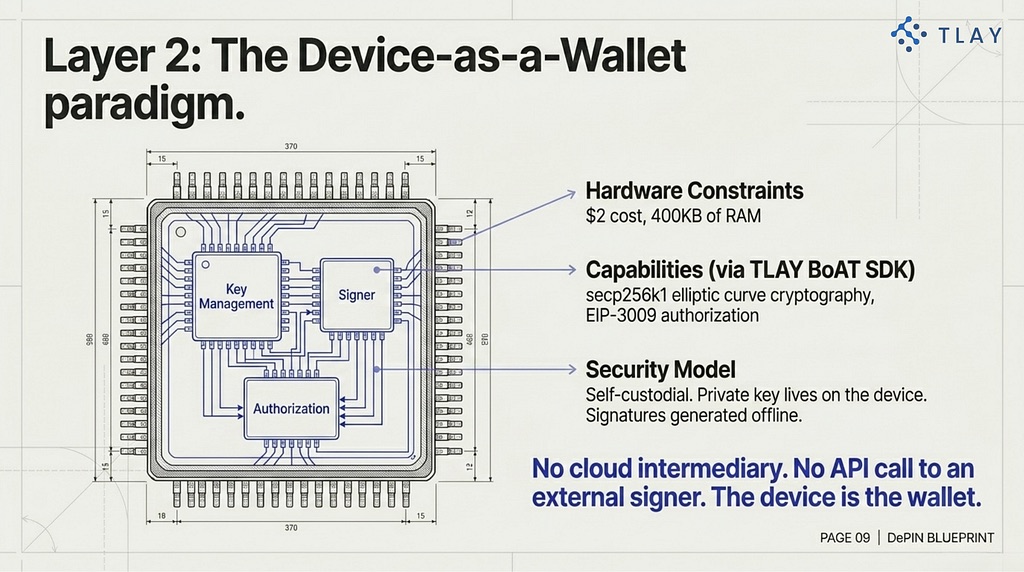
This is where BoAT (Blockchain of AI Things) SDK from TLAY enters. BoAT is a lightweight C library that brings blockchain signing capabilities to microcontrollers. It enables an ESP32 — a chip that costs $2 and has 400KB of RAM — to perform secp256k1 elliptic curve cryptography and sign EIP-3009 payment authorizations.
BoAT transforms a microcontroller into a self-custodial wallet. The private key lives on the device. The signature is generated on the device. No cloud intermediary holds the keys. No API call to an external signer. The device is the wallet.
This is the “Device-as-a-Wallet” paradigm. It means every DePIN device can autonomously authorize payments at the hardware level, even when offline from the internet (as long as it has a local communication channel like BLE).
Circle — The Settlement Layer
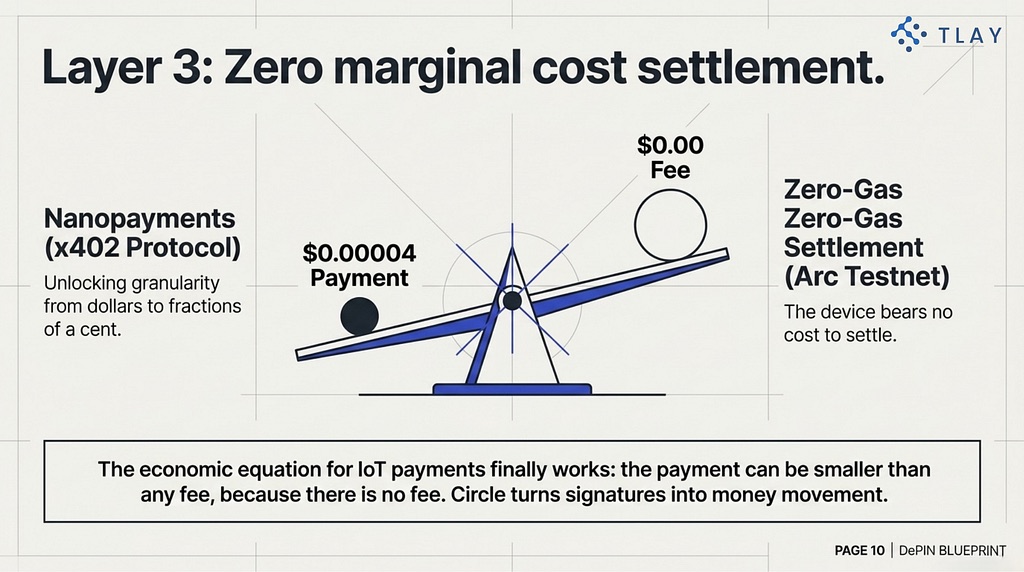
Circle provides two critical capabilities:
Nanopayments: Traditional blockchain transactions have minimum viable amounts dictated by gas fees. If gas costs $0.01, a $0.00004 payment is economically absurd. Circle’s nanopayment infrastructure, built on the x402 protocol, enables payments at any granularity — from dollars to fractions of a cent.
Arc Testnet: Zero-gas settlement means the device bears no cost to settle. The economic equation for IoT payments finally works: the payment can be smaller than any fee, because there is no fee.
Together, Circle turns cryptographic signatures into actual money movement — efficiently, at any scale, at zero marginal cost to the device.
Beyond the Demo: What This Unlocks
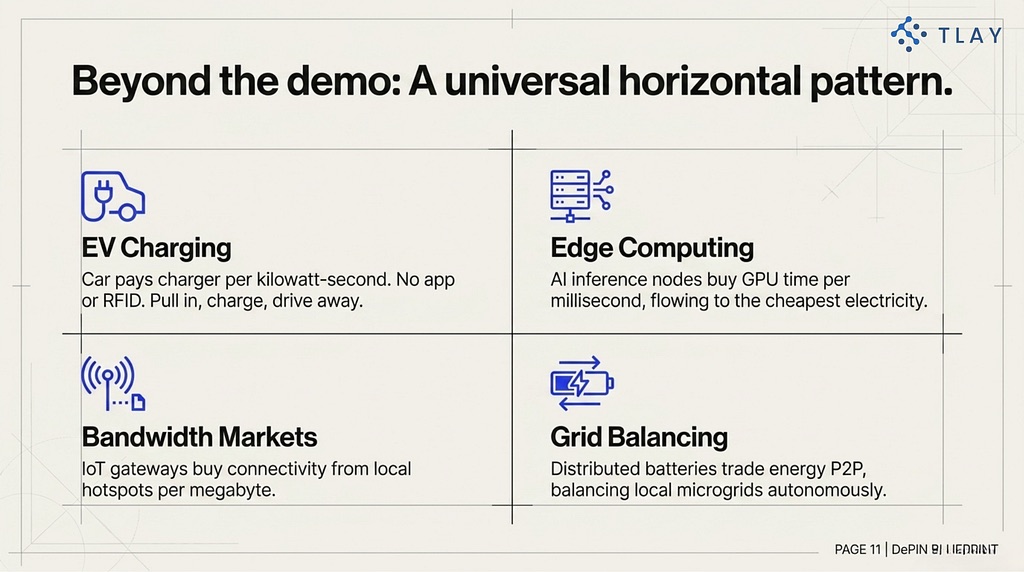
The eCandle x Bitaxe demo proves a pattern, not just a product. The same architecture — device signs payment, streams over local radio, settles via Circle — applies to:
- EV Charging: Car pays charger per kilowatt-second. No app, no RFID card, no network subscription. Pull in, charge, drive away.
- Edge Computing: AI inference nodes buy GPU time from nearby servers, paying per millisecond of compute. Workloads flow to wherever electricity is cheapest.
- Bandwidth Markets: IoT gateways buy connectivity from nearby hotspots, paying per megabyte. Dead zones fill themselves through economic incentive.
- Sensor Data Markets: Weather stations, air quality monitors, and agricultural sensors sell data directly to consumers — per reading, per second, per data point.
- Grid Balancing: Distributed batteries and solar installations trade energy peer-to-peer, automatically balancing local microgrids without a utility as intermediary.
In every case, the pattern is the same: a device with a wallet, a local communication channel, and a settlement layer that works at any scale.
From Demo to Infrastructure
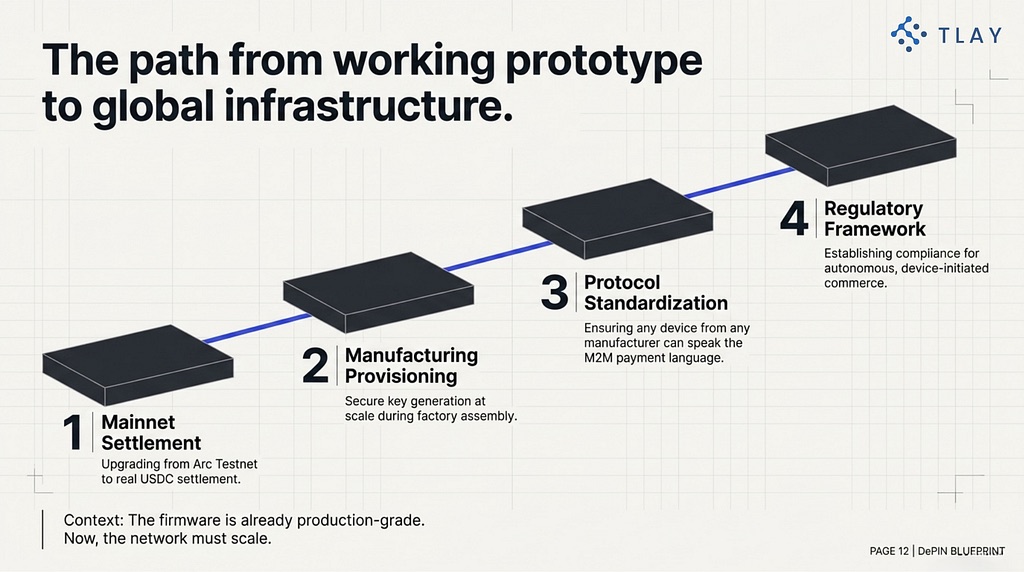
What we have demonstrated is not a prototype. The firmware is production-grade — battle-tested through OTA updates, crash recovery, BLE+WiFi coexistence on single-radio hardware, and deployment across multiple countries. The payment protocol handles dynamic pricing, session management, proof accumulation, and batch settlement.
But it is still early. To move from demo to infrastructure, we need:
- Production settlement on Arc Mainnet — moving from testnet to real USDC settlement 2. Device provisioning at scale — secure key generation and wallet creation during manufacturing 3. Standardized M2M payment protocol — so any device from any manufacturer can participate 4. Regulatory framework — for autonomous device-initiated payments
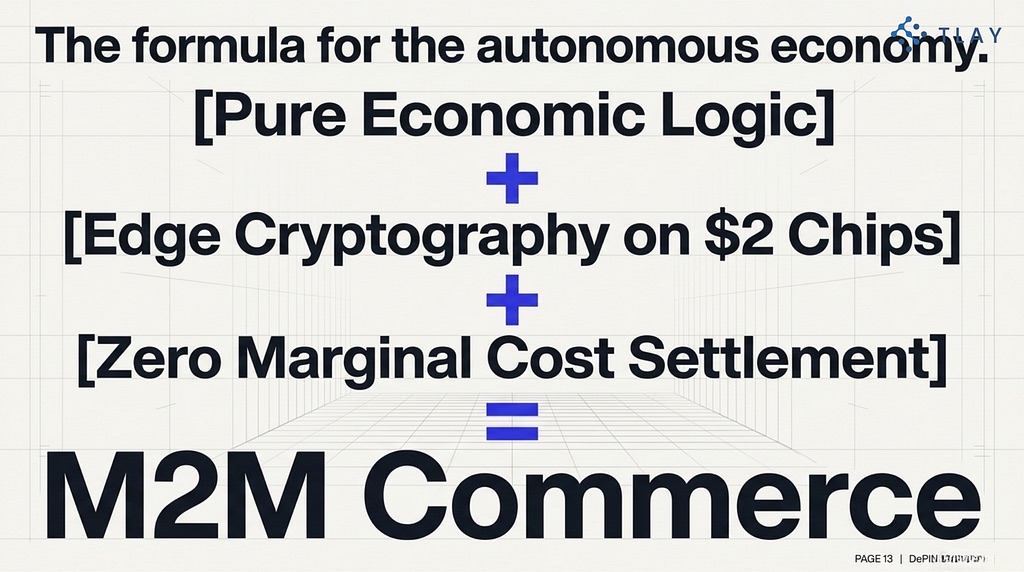
This is why we are sharing this with Circle. Not as a finished product, but as a proof of capability — evidence that the future of machine-to-machine commerce is not theoretical. It works today, on $2 chips, with real energy, real signatures, and real settlement.
The question is not whether machines will pay machines. The question is whether Circle will be the settlement layer when they do.
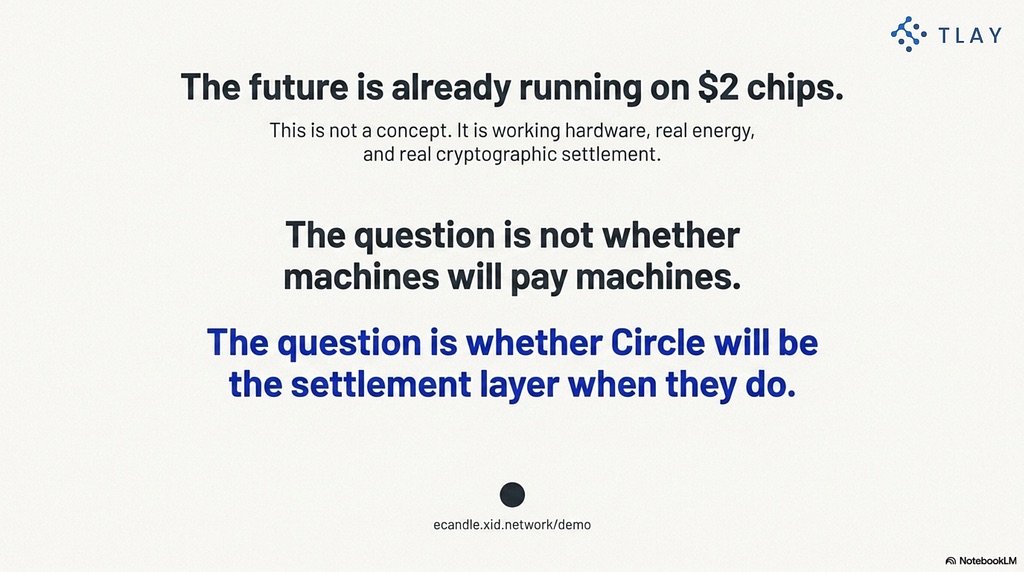
Demo: [ecandle.xid.network/demo]https://ecandle.xid.network/demo*)
Powered by Arkreen Network, TLAY BoAT MWR SDK, and Circle Nanopayments