AI agents can already pay for APIs in USDC. The physical world is a different story. Most of the machines people use every day, like chargers, massage chairs, washers and air pumps, can't take a digital payment at all, let alone a stablecoin.
We think the fastest way to change that is not to build new machines. It is to give the machines already out there what they are missing. That is Halo: a lightweight retrofit from TLAY that turns an existing machine into a place where people, and soon AI agents, can pay in USDC.
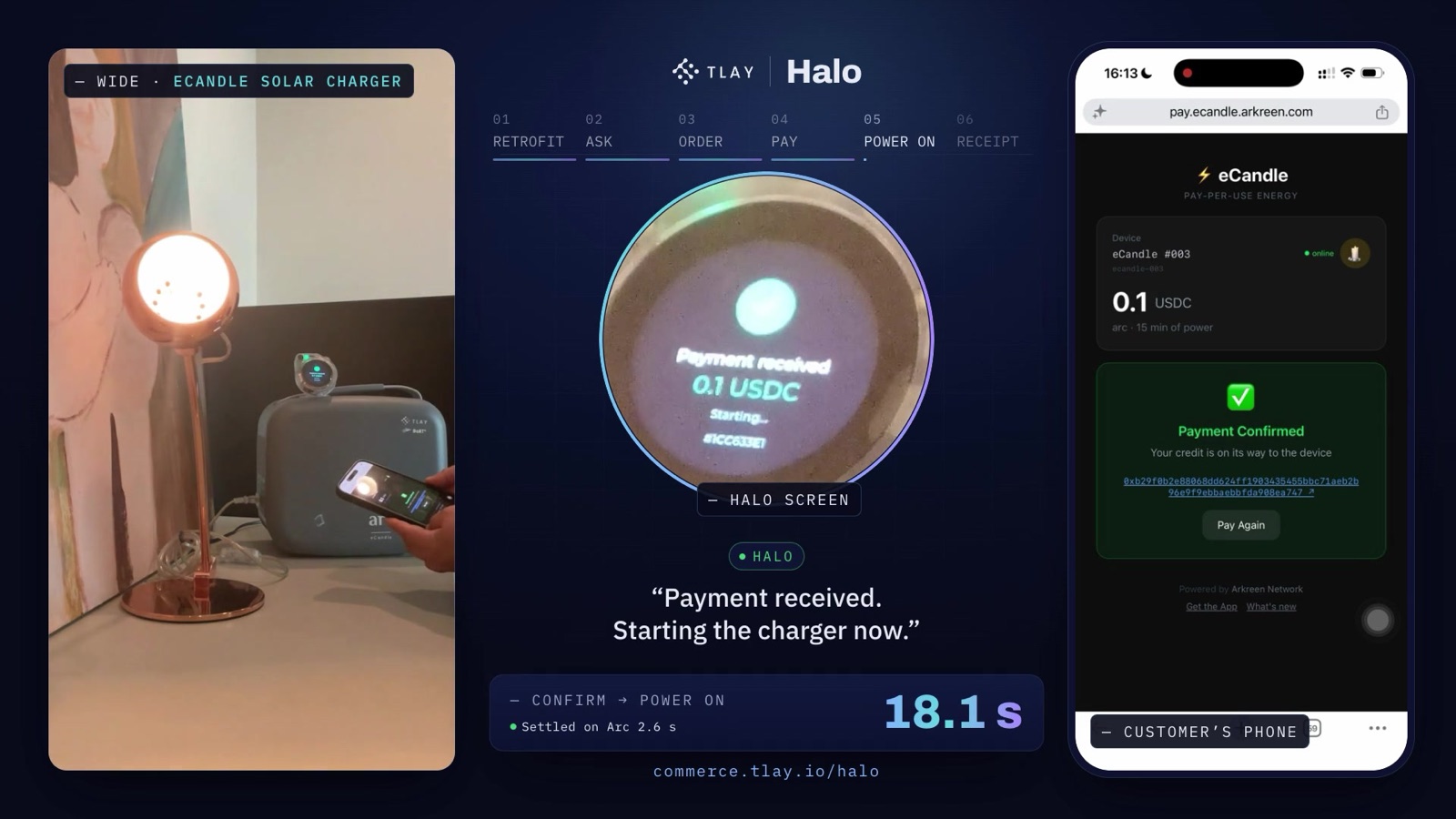
In our demo, we put Halo on a solar charger that was never designed to take payments. A customer asked it a question, ordered 15 minutes of charging by voice, paid 0.10 USDC on Arc from their own wallet, and the charger switched on 18.1 seconds after they tapped Confirm. We filmed it in one take, from three angles, and did not speed anything up.
Retrofit, not replace
The installed base is huge, and most of it still works. Operators rarely replace a working machine just to add a new way to pay, and "smart" replacements are expensive. So Halo is built to be light:
- No new machine. Halo clips onto the machine the operator already has.
- Quick to install. Put it on, connect it to Wi-Fi from your phone, and it is ready. The eCandle charger in the demo got its Halo in seconds.
- Fits how the machine is controlled. Halo switches the machine on through its cloud API (as with this charger) or through a relay for machines that have no API.
- Stablecoin payments from day one. Prices, payments and receipts are in USDC, settled on Arc.
One small device turns one machine into a stablecoin payment point. Repeat that across a fleet, and a whole installed base becomes USDC-ready without anyone replacing a machine.
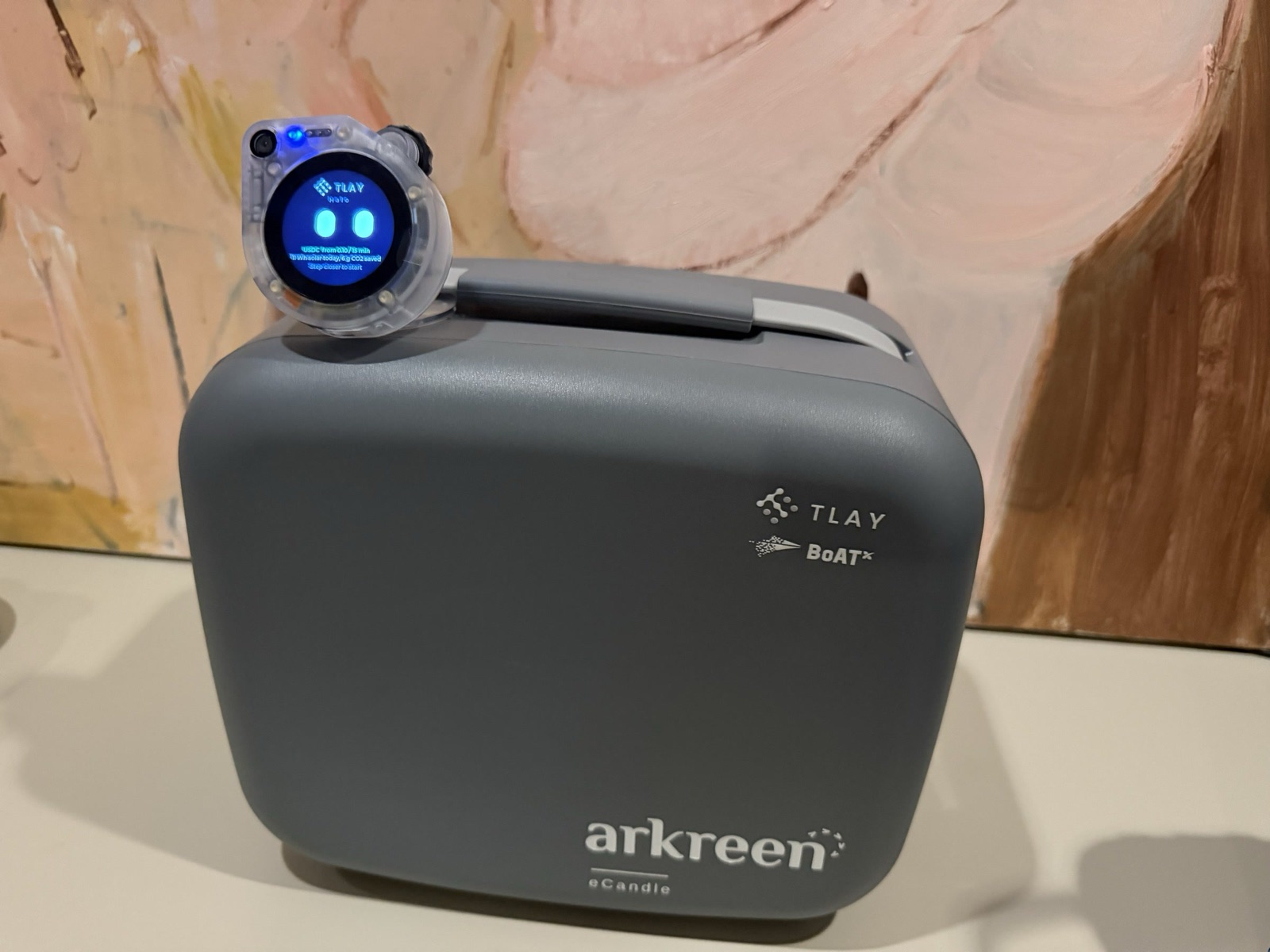
A physical AI agent
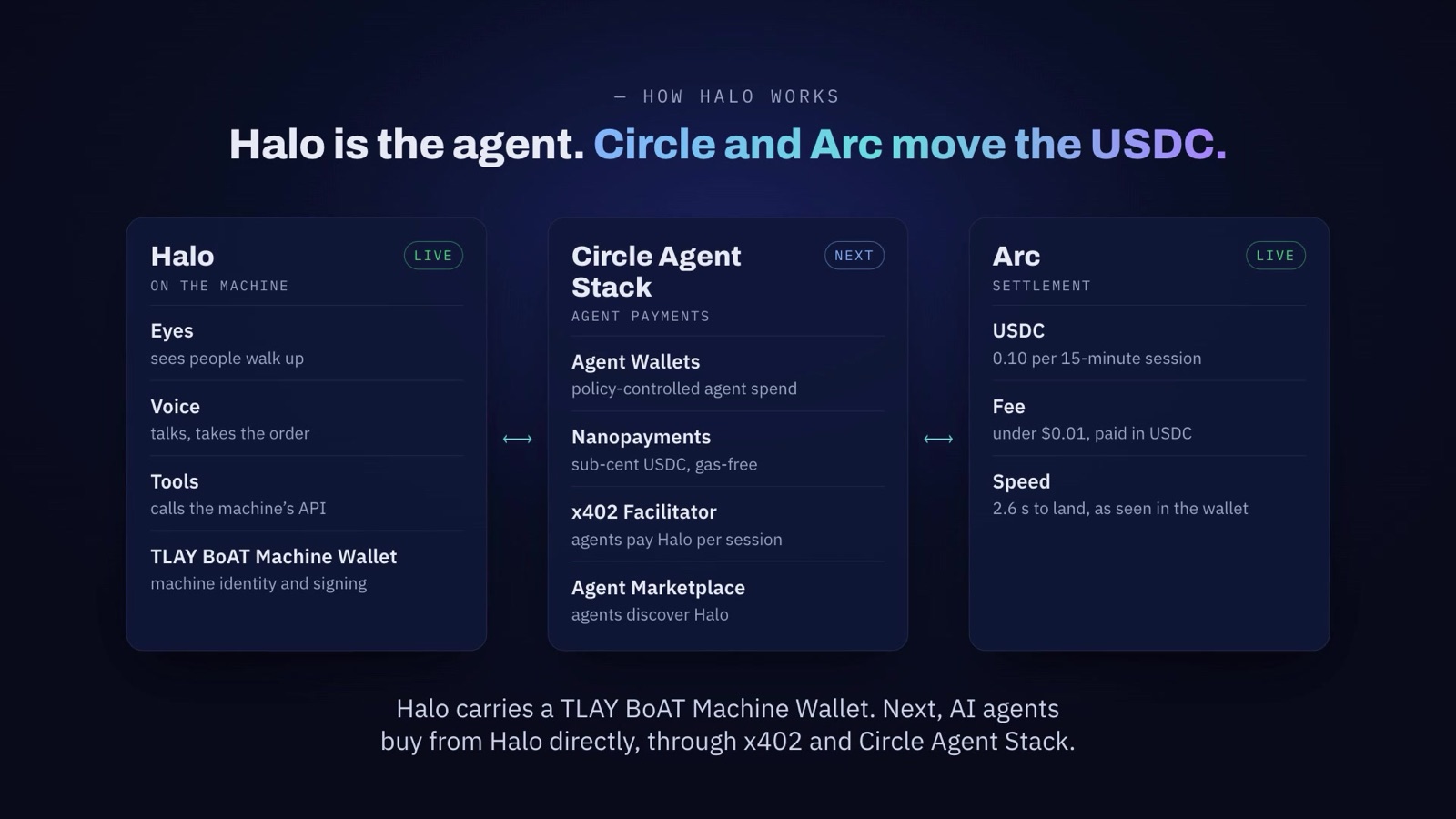
Halo is more than a payment screen. It is an AI agent with a body:
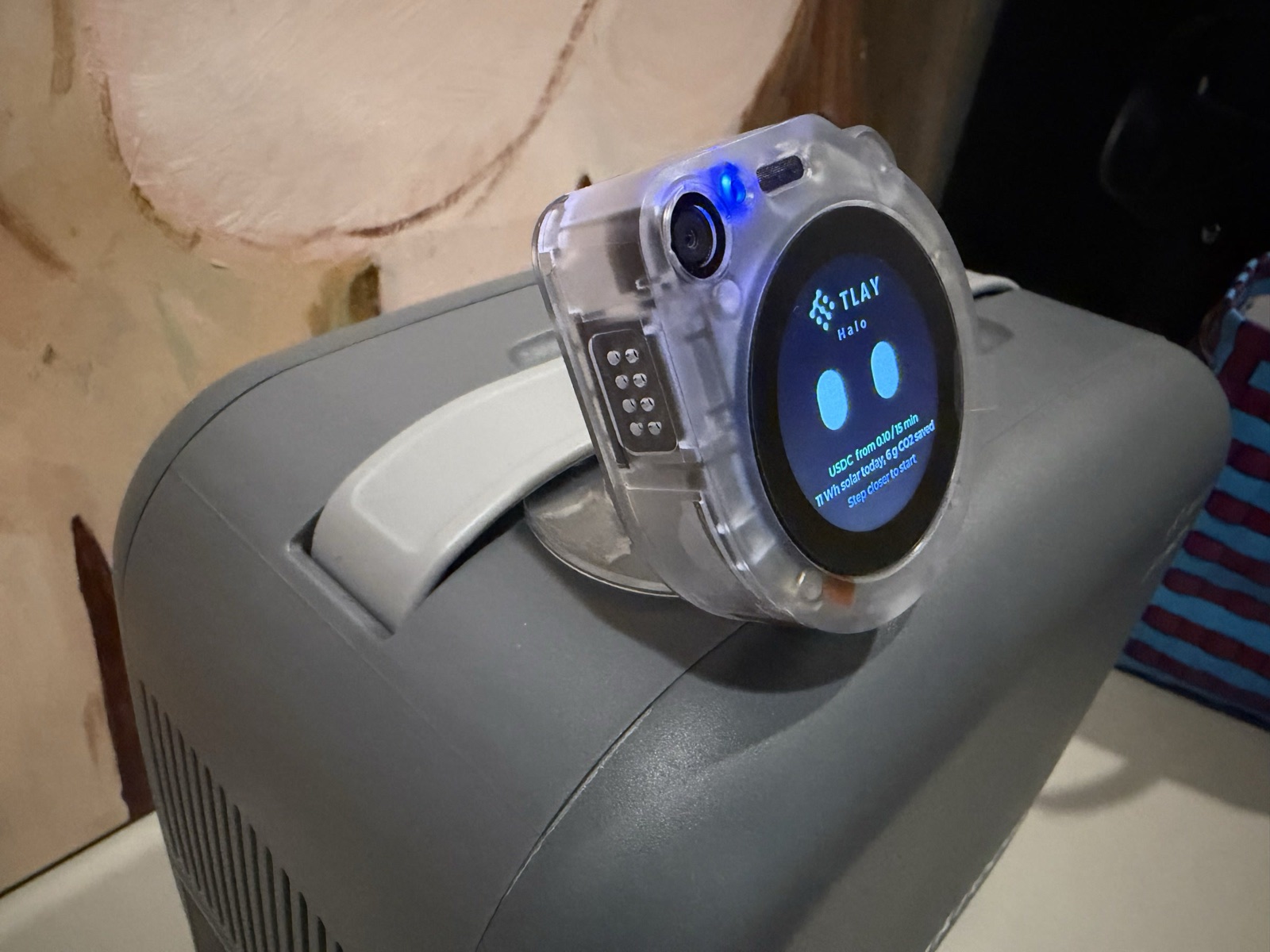
- Eyes. A camera notices when someone walks up, so Halo greets them.
- Voice. Say "Hi Halo", then ask a question or place an order in plain language.
- Tools. Halo answers by calling the machine's own API, the same way a software agent calls a tool.
- Wallet. Halo integrates the TLAY BoAT Machine Wallet, which gives each machine its own identity and signing key.
The demo, step by step
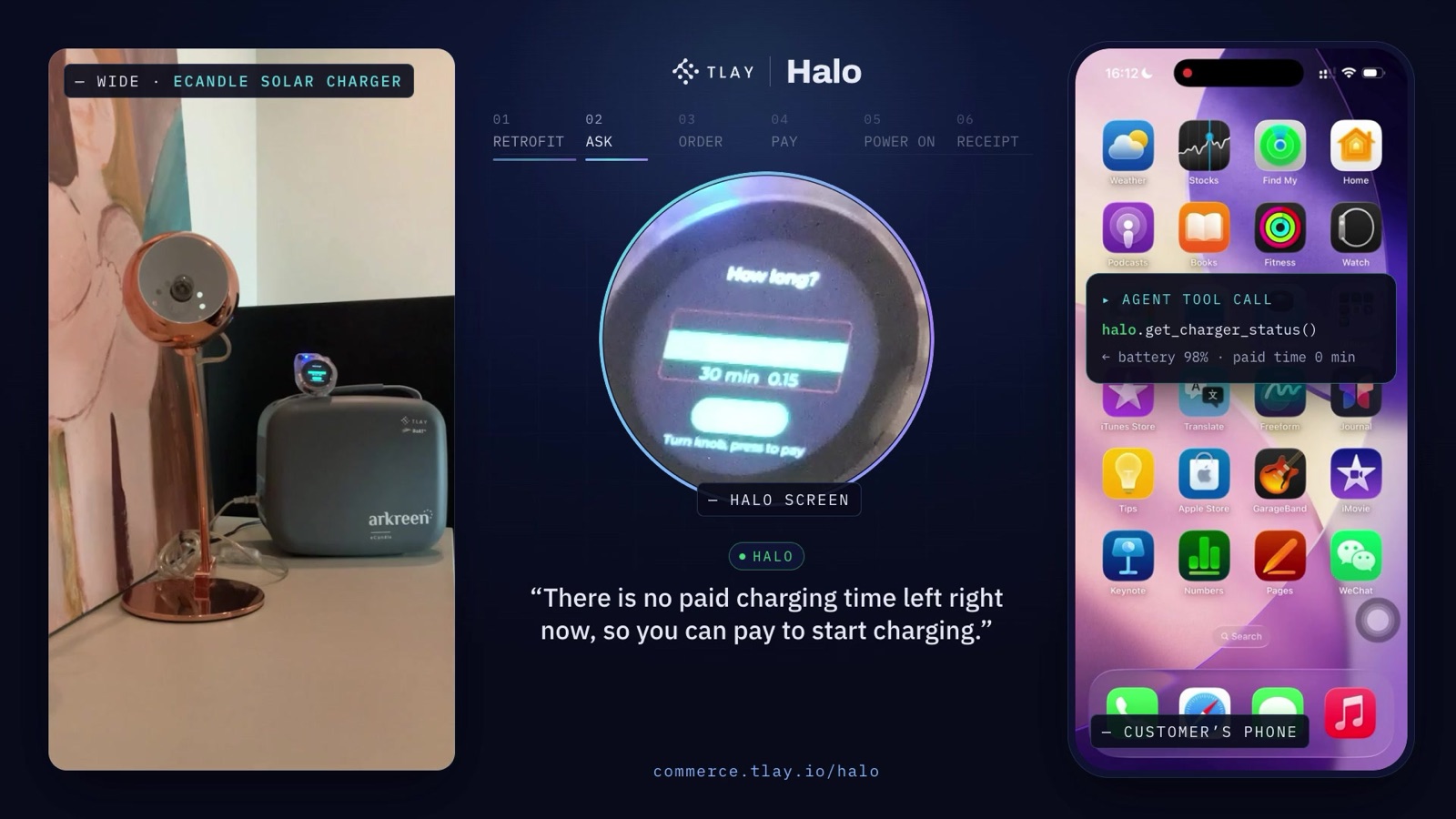
1. Ask. The customer says "Hi Halo" and asks, "How much energy is left?" Halo calls get_charger_status() and answers from live data: the battery is at 98 percent, and there is no paid time left.
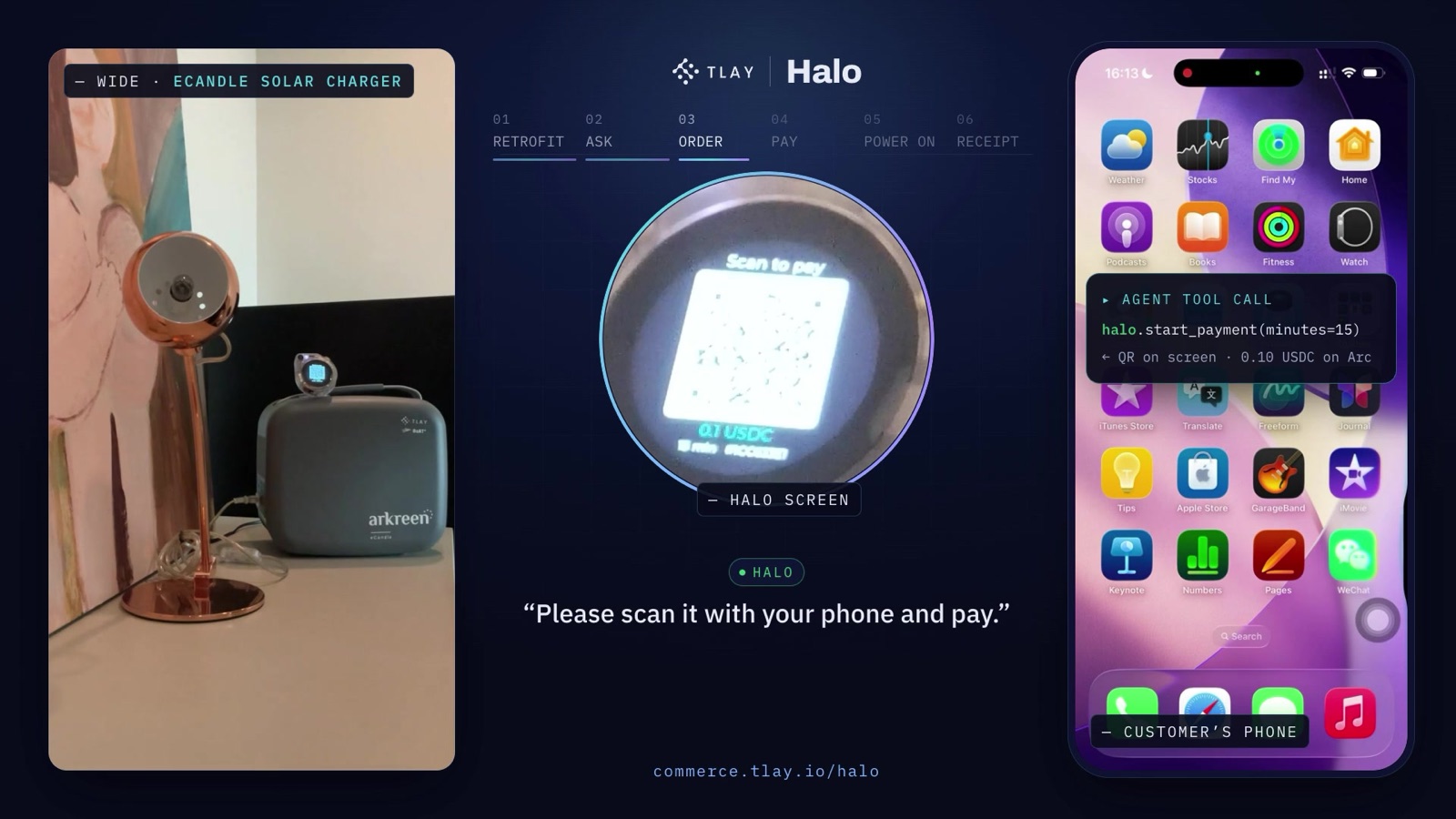
2. Order. "15 minutes charging." Halo calls start_payment(minutes=15), and the payment code is on its screen a second later: 0.10 USDC for 15 minutes. Both tool calls in the film come straight from our voice-agent log.
3. Pay. The customer scans the code and signs once in their own wallet. No app to install and no account to create. The network is Arc, the fee is under one cent, and the fee is paid in USDC, so there is no separate gas token to buy first.
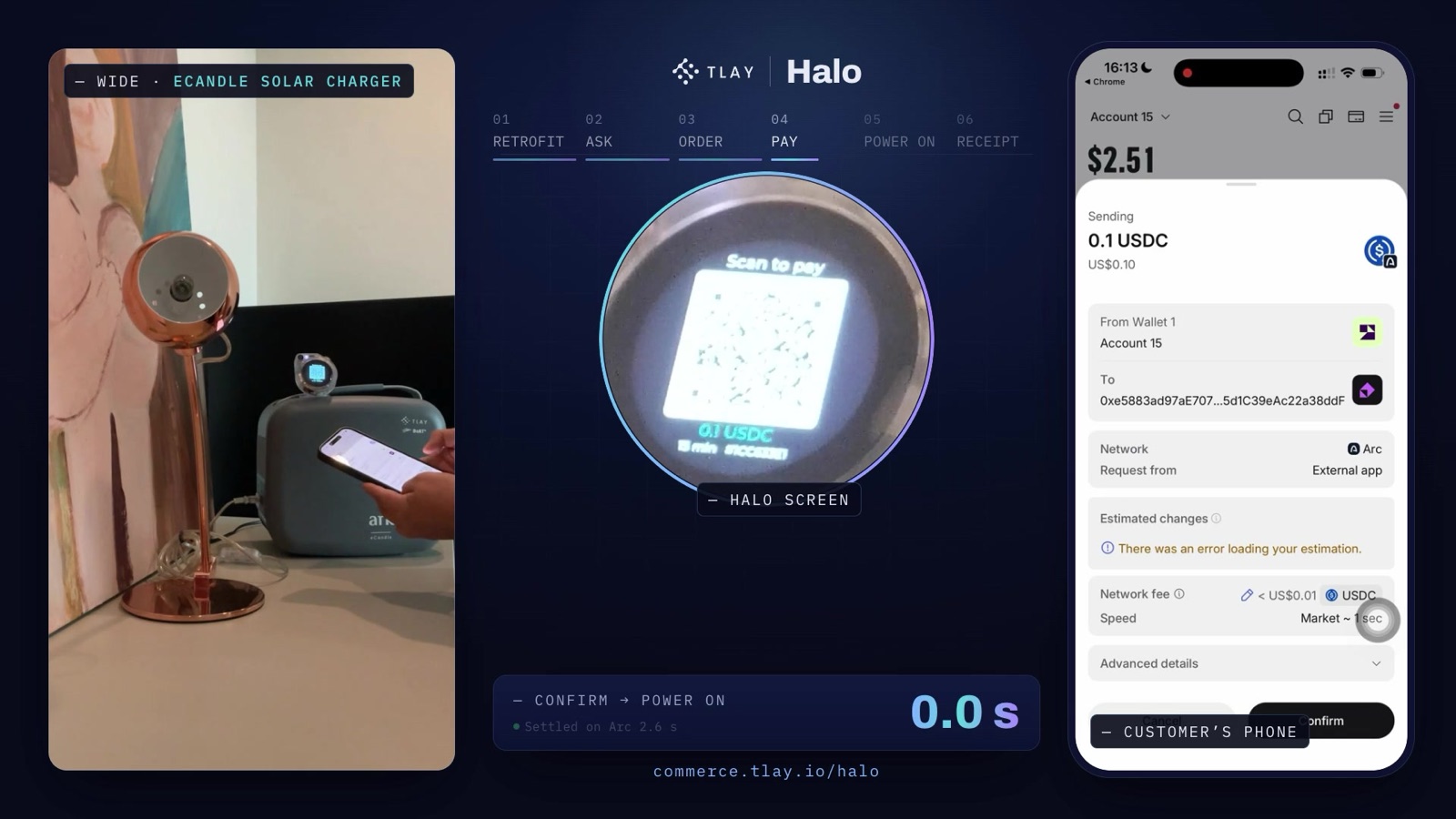
4. Power on. Halo announces "Payment received. Starting the charger now," and the lamp plugged into the charger lights up. The customer gets a receipt, and Halo counts down the paid time on its screen and reminds them before it runs out.
The numbers
| Measure | Result |
|---|---|
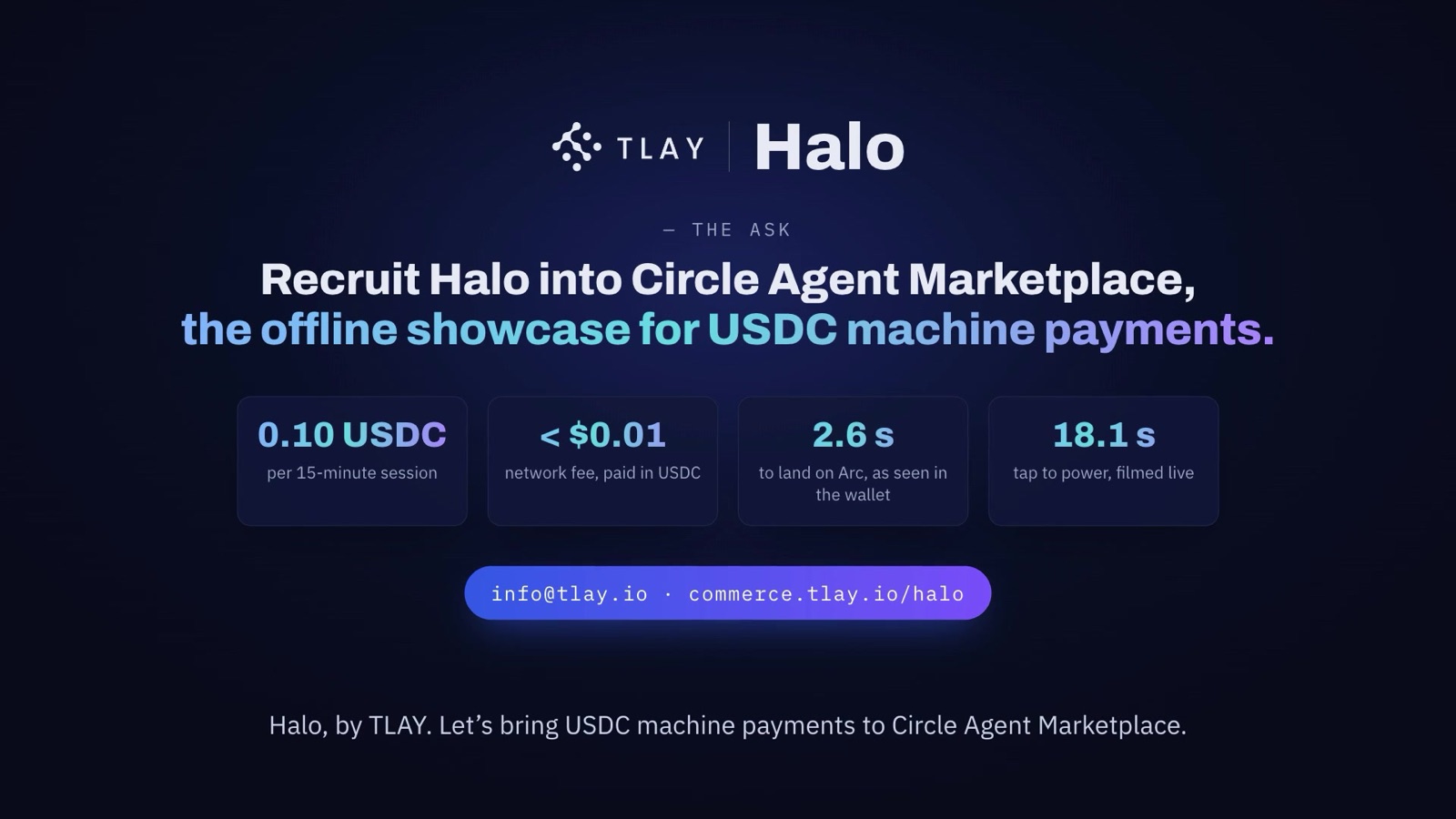
| Price | 0.10 USDC per 15-minute session |
| Network fee | under $0.01, paid in USDC |
| USDC lands on Arc, as the wallet shows it | 2.6 s after Confirm |
| Charger on | 18.1 s after Confirm |
How we measured. We recorded three views at once: a wide shot of the charger, a close-up of Halo's screen, and a screen recording of the customer's phone. We synced them on events seen by more than one camera, to within about a tenth of a second, and took the first frame where each event is visible. The 2.6 seconds is when the wallet shows the new balance; the transfer itself may complete a little earlier.
Why USDC on Arc
A 15-minute charge is worth about ten cents. For a payment that small to work at a machine:
- The fee has to be a tiny fraction of the price. On Arc it was under one cent.
- The customer shouldn't need a second token to pay the fee. On Arc the fee is paid in USDC.
- The money has to land while the customer is still standing there. The wallet showed it in 2.6 seconds.
- Customers and operators need a dollar they already understand. USDC is that dollar.
Where Circle Agent Stack fits
Today, people pay Halo by scanning a code. Next, AI agents pay it directly. Circle Agent Stack already has the pieces:
- Agent Wallets let an agent hold USDC under spending rules.
- Nanopayments make sub-cent USDC payments practical.
- The x402 Facilitator lets a seller accept USDC on Arc from an agent.
- Agent Marketplace is where agents find services to buy.
Put a Halo-equipped machine behind an x402 endpoint, and an agent can buy 15 minutes of charging the same way it buys an API call.
A proposal to Circle
Agent Marketplace lists services that live on the internet. We'd like to add one that lives in the real world. We propose bringing Halo into Circle Agent Marketplace as the offline showcase for USDC machine payments: real machines, real 10-cent sessions, settled on Arc, with a retrofit light enough to roll out across the installed base.
Get in touch
If you run machines and want to pilot Halo, or you are building on USDC and Arc and want to work with us, write to [email protected] or visit commerce.tlay.io/halo.