Charging power
0.0W
Open reference design · MIT
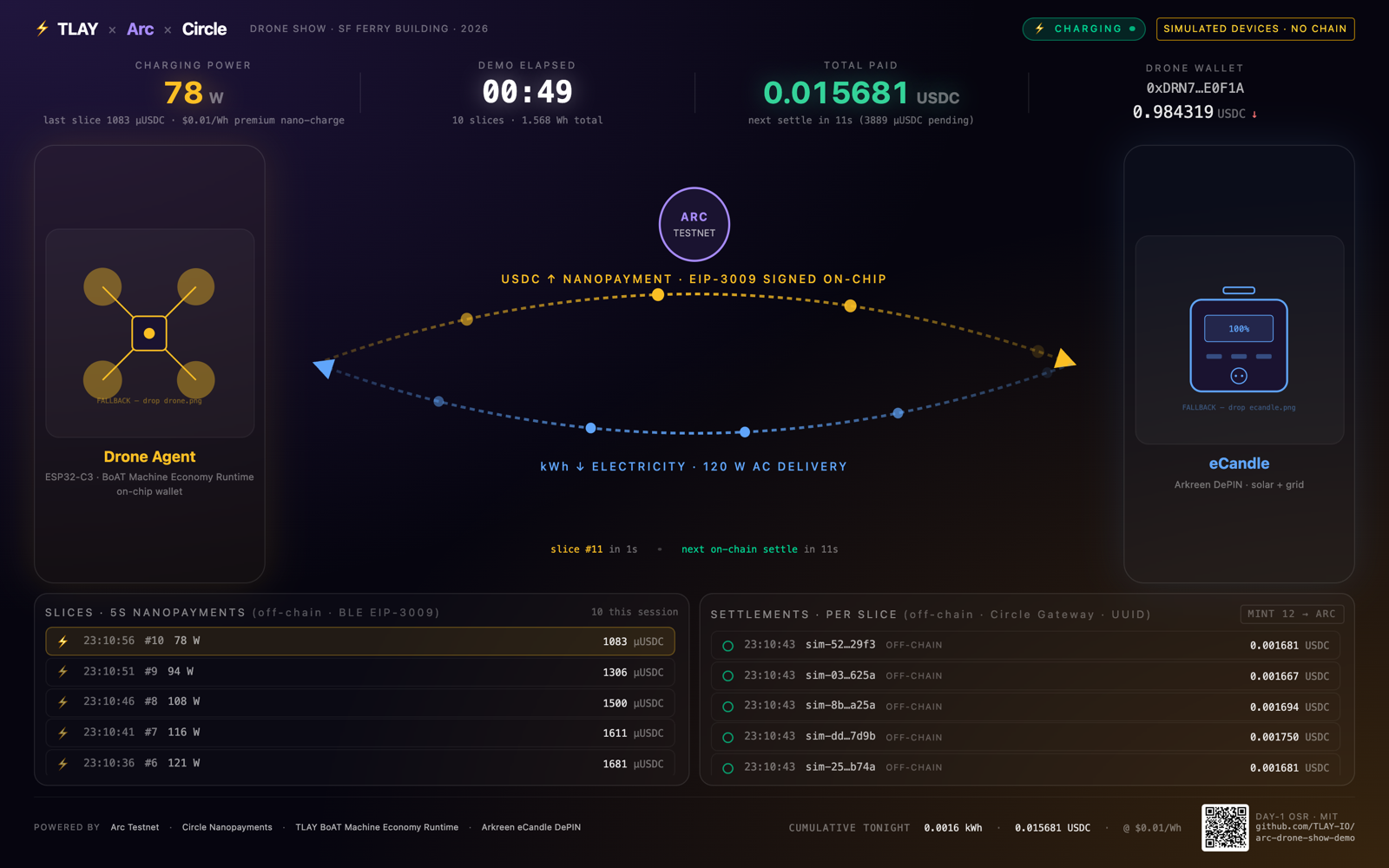
Two ESP32 boards running BoAT MER, and a Bluetooth link between them. The charger meters the power, the drone signs a USDC payment every five seconds for exactly what it drew, and the batch settles on Arc. No human in the loop.
Every 5 seconds it prices the slice it just delivered: avg W × 5 s × price.
A USDC authorization (EIP-3009) for that amount, with a key that never leaves the board. It goes back over BLE.
The charger relays six signed slices over MQTT. A small worker forwards them to an x402 settle endpoint.
Circle Gateway credits the seller on Arc. One more signature mints the funds on-chain when the seller wants them.
September 17, 2026 · San Francisco
A drone show over San Francisco marked the launch of Arc mainnet. One of the drones paid for its own recharge, nanopayment by nanopayment, machine to machine. This repository is the open reference for that payment flow.
Our name in the sky. Our tech in the transaction.Drones write AGENT DEMO BY TLAY.IO over the Bay Bridge · September 2026
Each formation is a step the two boards really took. Frames from the show video.
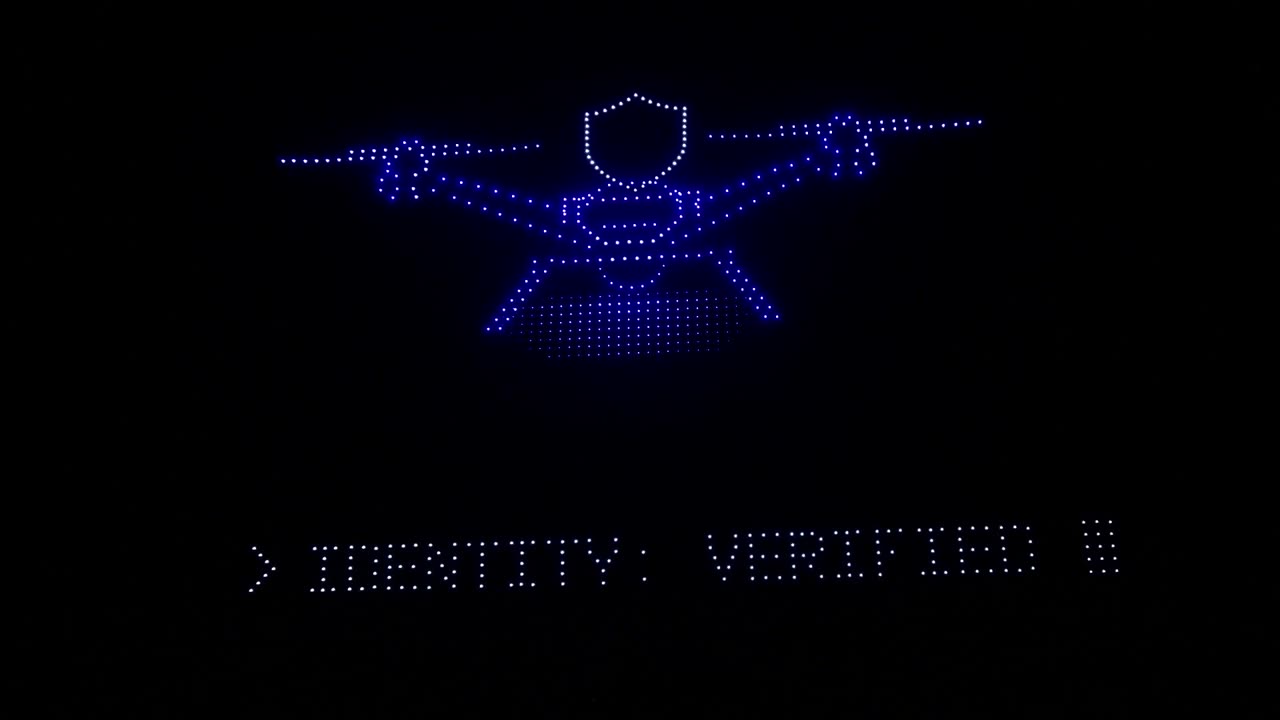 > IDENTITY: VERIFIEDEach board has its own key and address.
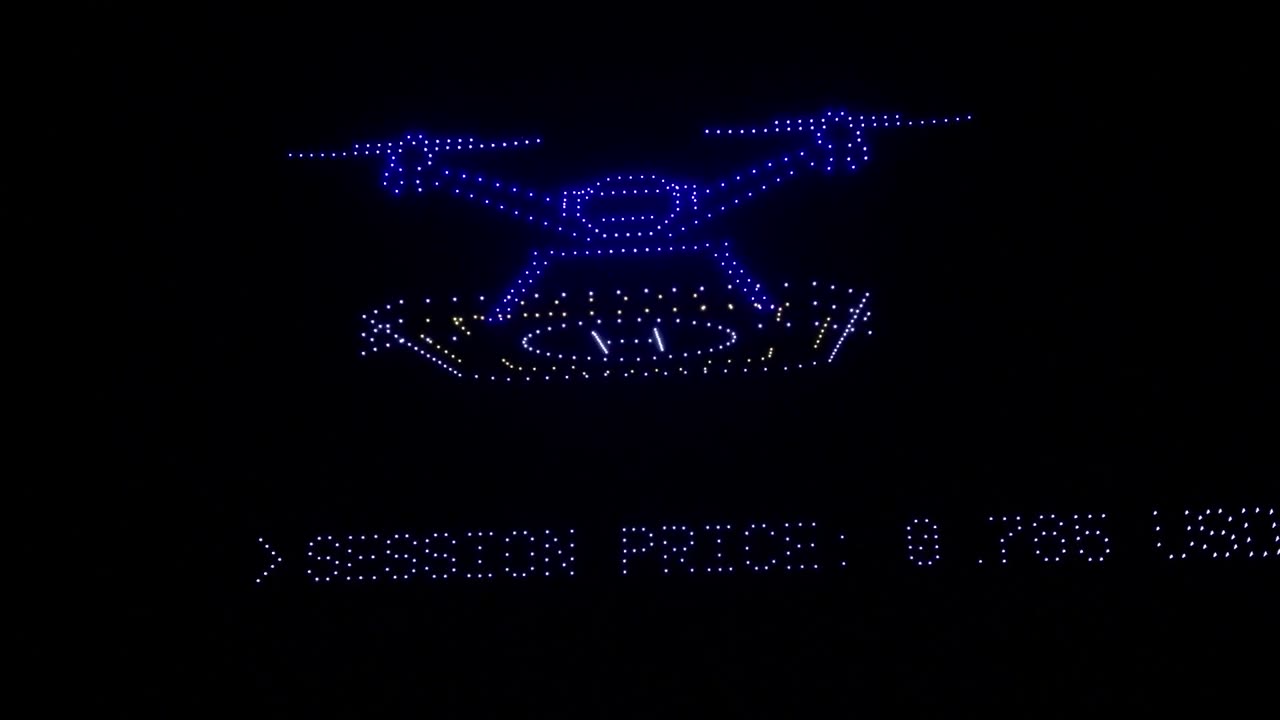 > SESSION PRICEThe charger quotes before any power flows.
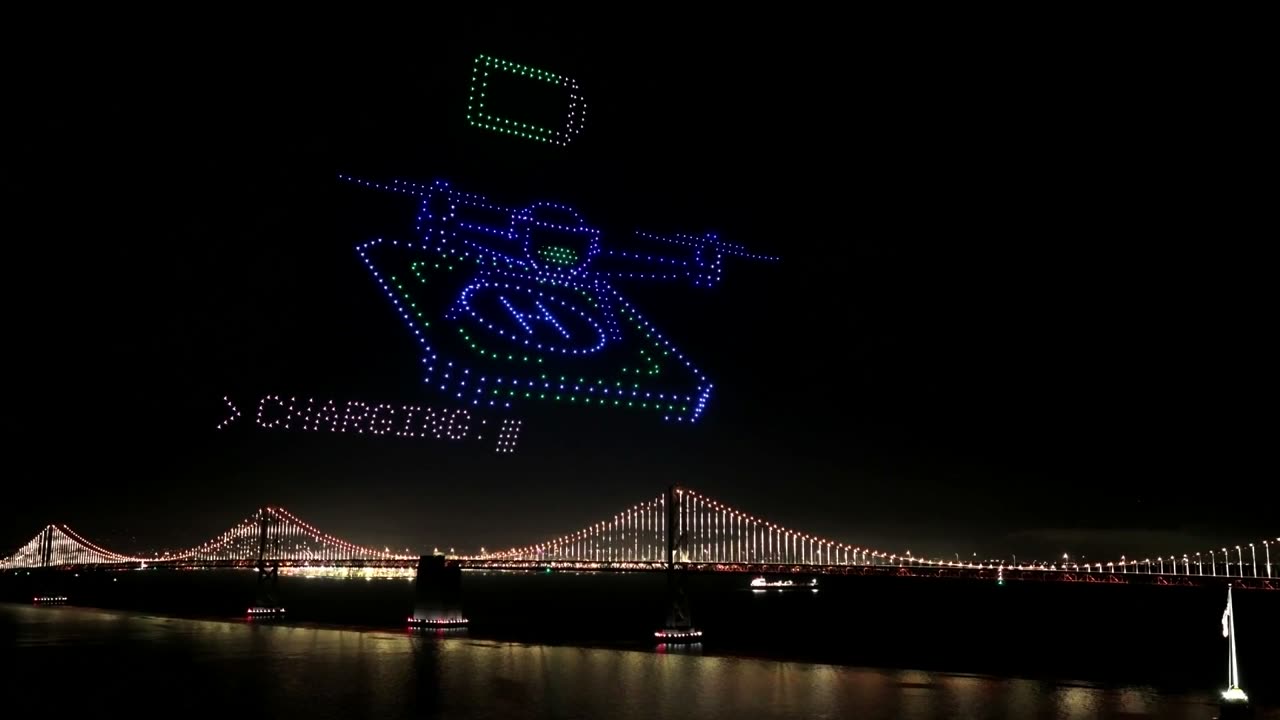 > CHARGINGA payment is signed every five seconds.
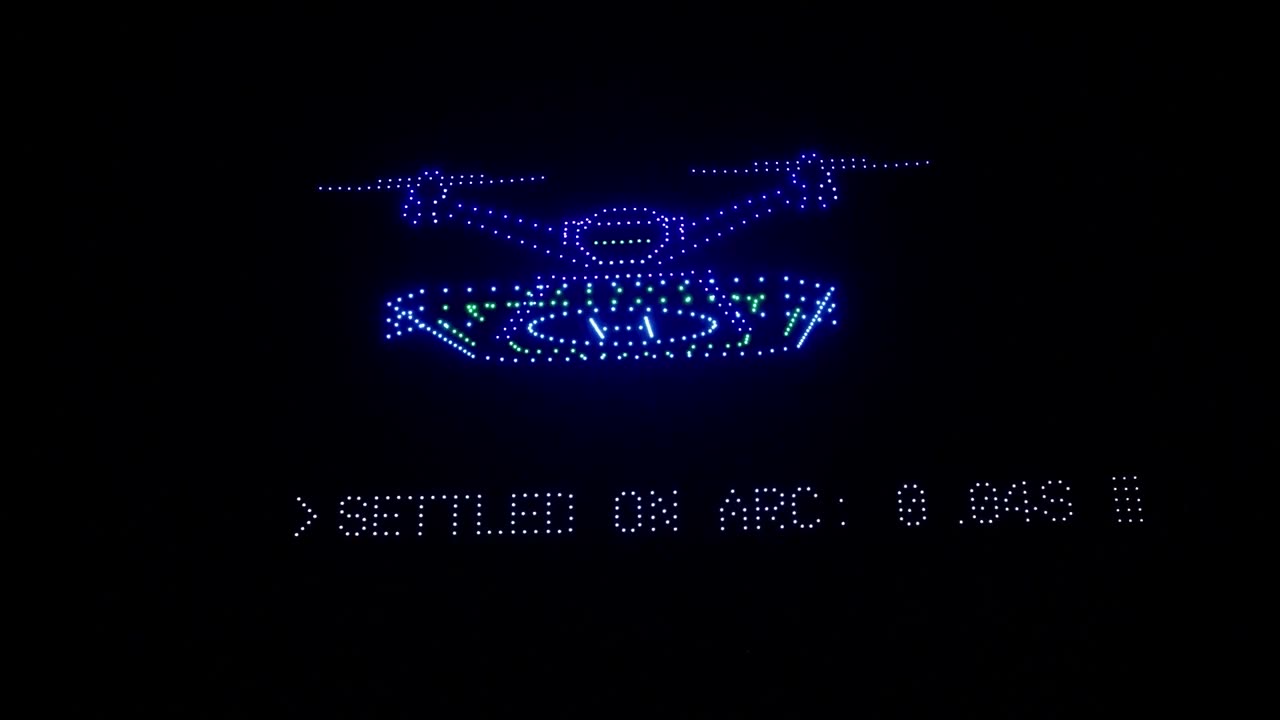 > SETTLED ON ARCBatches settle while it is still charging.
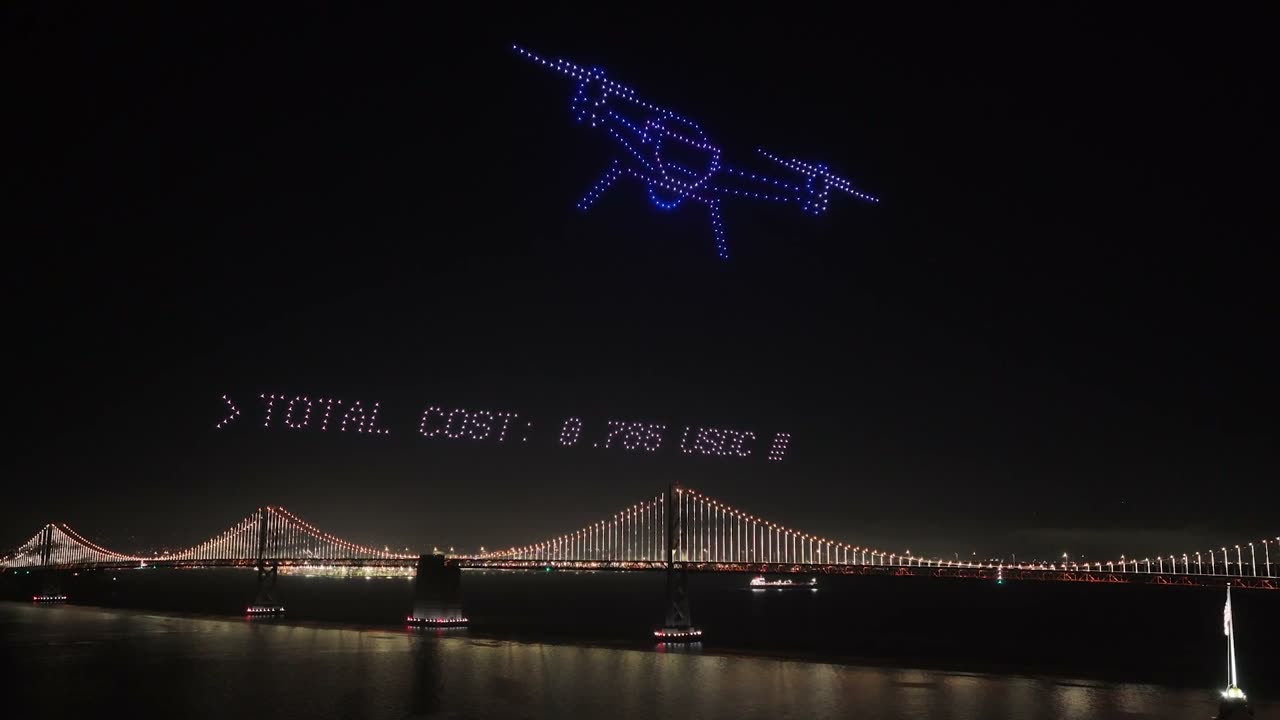 > TOTAL COST: 0.785 USDCIt paid for what it drew, and left.
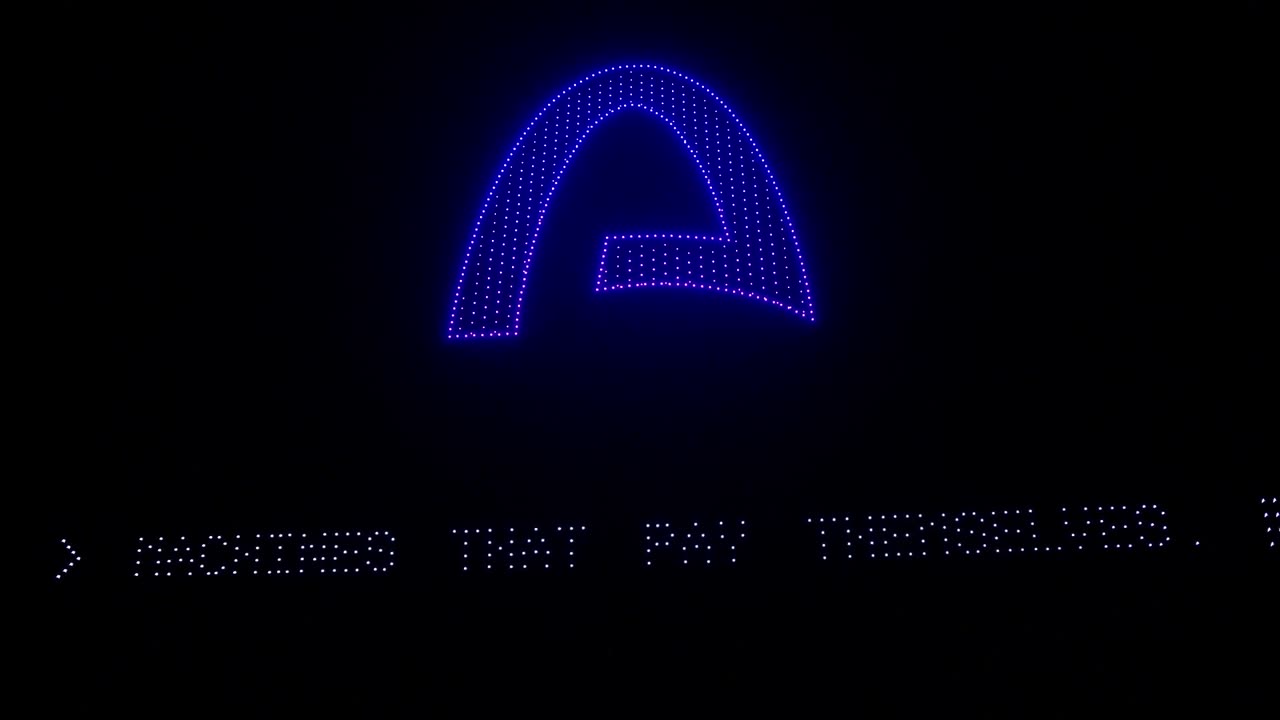 > MACHINES THAT PAY THEMSELVES.No checkout, no operator.
Inside the devices
Both boards run BoAT MER, TLAY's open machine-economy runtime, pulled in as an ESP-IDF component. The same runtime plays seller on one board and buyer on the other.
The pair on the nightArkreen eCandle power station (seller) · the drone (buyer) · the live page on the laptop
apps/ecandle0xEE00apps/droneThe buyer needs no network. No Wi-Fi stack, no provisioning, no credentials. The seller is the gateway for both sides, so the design works for portable and battery-powered loads.
The buyer decides for itself. It reads the charger's live output over BLE and opens or closes the payment stream on its own. No cloud service sits in the slice path.
The seller holds no chain parameters. It forwards the buyer's signed authorizations as they are, so the same firmware runs on testnet and mainnet.
You pay for what you drew. At the demo price of $10/kWh, a 120 W slice costs 1,667 µUSDC. When the power tapers, so does the next slice.
In the show these two boards sat inside an Arkreen eCandle power station and a drone. On your desk they are two ordinary ESP32 dev boards. Building for another chip? BoAT MER is plain C with a thin porting layer.
Try it · about 3 minutes
$ git clone https://github.com/TLAY-IO/arc-drone-show-demo
$ cd arc-drone-show-demo/cloud
$ docker compose -f docker-compose.sim.yml up --build
# then open http://localhost:3000/demo?live=1
A device simulator publishes the same events a real charger does. The real broker, the real event bridge and the real demo page render them: a slice every 5 s, a settlement batch every 30 s.
What this run does not prove. Nothing is signed, settled or minted, and nothing contacts Circle or Arc. The page says so in its header, and every simulated row id starts with sim-.
Ready for real signatures? The full walkthrough takes two ESP32 dev boards and 30 to 45 minutes on Arc Testnet.
What you get
apps/ecandleSeller firmware: metering, BLE server, MQTT uplink
Real AC output simulatedapps/droneBuyer firmware: BLE only, signs every slice on the board
RealBelongs to the hardware vendor. A dev board stands in for it
Not herecloud/settle-workerForwards each batch to the settle endpoint
Realcloud/webThe live demo page and its event bridge
Realcloud/burn-intent-workerOptional mint to Arc, with EIP-712 tests against Circle's published type hashes
Realcloud/simStands in for both boards in the no-hardware run
SimulatedHosted service. The repo uses its open client and public endpoint
Server not hereVerifies each authorization and credits the seller
RealWhere the balance settles and mints land
RealReal runs as written, and CI builds both firmwares and runs the cloud tests on every change. Simulated is labelled as such wherever it appears. Not here is closed or vendor-owned, and the repo says how it is replaced.
Build on it
Anything that can meter what it hands over can sell it in five-second slices. Anything that can hold a key can buy. Pick a scenario to see the two sides and the slice.
Prices here are illustrative, chosen to show the arithmetic. Only the drone charging scenario has been built and run.
Whatever your device hands over: watt-hours, liters, megabytes, grams, seconds of machine time.
One number per unit. The slice amount follows from the reading.
BLE protocol, on-device signing, batching and settlement come from BoAT MER and this repo.
Start with the simulator, move to two dev boards, then put it in your own device. Every step is in the repository.